Accessibility Room Questions: FAQ for First-Time Travelers
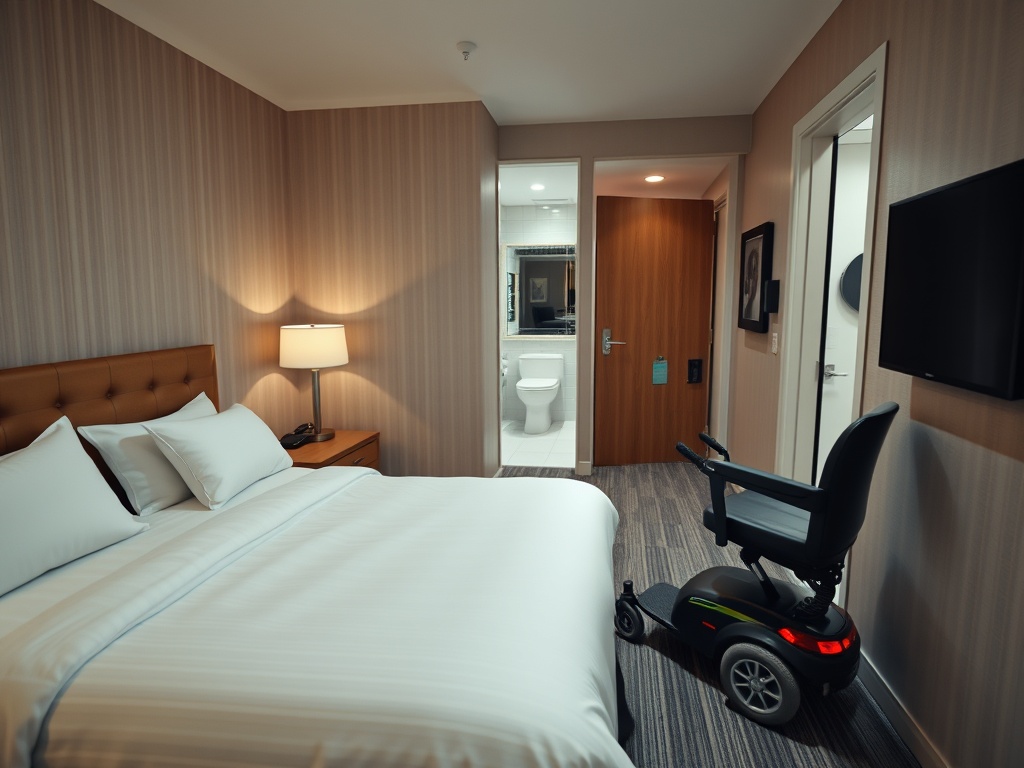
An accessible hotel room is a room designed or equipped with features intended to support guests with particular mobility, sensory, or communication needs, but the exact meaning depends on local law and the property’s room type. Travelers should confirm the specific feature they need, because the word “accessible” alone does not tell you the shower type, bed clearance, communication devices, doorway layout, or other details.
TL;DR Book the exact accessibility feature, not just the label. Ask feature-specific questions, request written confirmation, and check the whole journey through the property, including parking or drop-off, entrance, elevator, room route, bathroom, bed area, and any facility you plan to use.
Turn “accessible” into specific room requirements
What does an accessible hotel room usually mean?
It generally means the room includes design or communication features intended to make lodging usable for guests with disabilities, but the exact features and legal requirements vary by country and jurisdiction. In the United States, places of lodging are covered by the Americans with Disabilities Act, and the 2010 ADA Standards for Accessible Design include requirements for transient-lodging guest rooms with mobility and communication features. Outside the U.S., different national and local standards may apply. The practical booking step is to identify your need and ask how the exact room meets it.
Are all accessible rooms designed the same way?
No. One room may have mobility features, another may have communication features, and some may combine both. Bathroom configurations can also differ, including a roll-in shower, transfer shower, or bathtub with accessibility features, depending on the property and applicable standard. Bed count, room class, and amenities can vary too. In U.S. ADA guidance, accessible rooms are intended to be dispersed among room types so guests with disabilities have choices, but the available inventory at one property still depends on its size and configuration. Confirm the room description before treating one accessible category as interchangeable with another.
What should I ask if I need a roll-in shower?
Ask directly whether the exact reserved room has a roll-in shower and, if relevant to you, whether there is a fixed or folding seat, handheld shower control, grab-bar configuration, threshold, and clear floor space that meets your needs. Do not assume that an “accessible bathroom” means roll-in shower; some accessible rooms use a bathtub or another compliant bathing configuration. If the website shows multiple accessible room types, save the exact room name. A phone confirmation can help, but written notes or a message attached to the reservation provide a clearer record of the feature requested.
How can I check the bed and circulation space?
Ask about clear space beside the bed, bed height if that matters for transfers, the route from the room entrance to the bed and bathroom, and whether furniture can be moved without blocking required access. Travelers using wheelchairs, walkers, or other mobility devices may need more than a wide entrance. U.S. ADA standards address accessible routes and clear floor space in designated guest rooms, but personal equipment and transfer techniques differ. A generic measurement is only useful if it matches how you use the space. The guest-room design FAQ can help translate everyday room-layout features into questions about circulation and usability.
| Feature to confirm | Example question | Why the detail matters |
|---|---|---|
| Bathing setup | Does this exact room have a roll-in shower, transfer shower, or accessible tub? | Different bathing configurations support different transfer needs |
| Bed area | Is there clear floor space on the side I use for transfers? | Room labels do not describe every furniture position |
| Doorway and route | Is there a step-free route from entrance to room and bathroom? | A suitable room is not useful if the route is inaccessible |
| Controls | Are thermostat, lights, outlets, and window controls reachable? | Independent use can depend on control placement |
| Communication features | What visual or tactile alerts are provided? | Hearing and vision needs differ from mobility needs |
| Shared facilities | Is there an accessible route to breakfast, pool, meeting room, or shuttle? | Accessibility extends beyond the sleeping room |

What are communication-accessible room features?
Depending on the jurisdiction and property, these can include visual notification devices, accessible telephones, door-knock alerts, fire-alarm notification, or other systems for guests who are deaf or hard of hearing. Guests who are blind or have low vision may need information in an accessible format or assistance with room orientation. The U.S. Department of Justice’s lodging guide for guests who are blind or have low vision discusses equal access to hotel services, room orientation, and accessible communication. Ask the property which devices are built in, which are available on request, and how staff will provide urgent information.
Should I check only the room, or the whole hotel route?
Check the route you will actually use. That may include parking, drop-off, curb ramps, lobby entrance, check-in desk, elevator, hallways, breakfast area, restaurant, meeting rooms, fitness room, pool, beach access, shuttle stop, and emergency procedures. An accessible room does not automatically mean every optional feature at a complex resort is equally easy to reach. If the property is large, ask how far the room is from the elevator or core facilities and whether internal transport can accommodate your device. The resort types FAQ can help identify which facilities and distances may need separate verification at leisure properties.
How do I make sure the accessible room stays attached to my reservation?
Use the booking process that lets you reserve the accessible room type itself rather than placing only a free-text request on a standard room. After booking, review the confirmation for the exact accessible category and contact the property if any required feature is missing from the description. Keep the confirmation and any written follow-up. If you booked through an intermediary, verify that the hotel received the correct room type. A request such as “needs accessible room” is less precise than a reservation that names the required bathing or communication feature.
What if the room I receive does not have the confirmed feature?
Contact the front desk promptly and describe the specific missing feature. Show the written reservation or message if helpful. Ask for another room that meets the requirement and, if none is available, ask what alternative accommodation or service can be provided. Legal remedies vary by jurisdiction, so this article should not be treated as legal advice. If the issue involves discrimination or a failure to meet accessibility law, use the appropriate local enforcement or consumer-protection route after addressing immediate safety and lodging needs.
Build a feature-by-feature confirmation
Before booking, make a short list of what is essential and what is merely preferred. “Wheelchair accessible” may be too broad; your real list might be step-free entrance, roll-in shower with seat, clear space on the right side of the bed, reachable controls, and accessible shuttle. A guest with hearing loss may have a completely different list. Giving the hotel specific requirements makes it easier to match the correct inventory and reduces assumptions on both sides.
For complex trips, confirm the room and the surrounding services in writing. If the hotel changes your room type, dates, or property, recheck the accessibility features rather than assuming they transferred automatically. Keep important phone numbers and a backup plan for arrival, especially when the destination has limited accessible inventory.
Book the feature, not the label
Accessibility works best when the reservation describes what you actually need. Use official room descriptions, ask precise questions, confirm the route through the property, and retain written details. A broad “accessible” tag is a starting point; the useful booking decision comes from matching specific features to the traveler who will use them.