How to create a seasonal maintenance program for campuses and portfolios
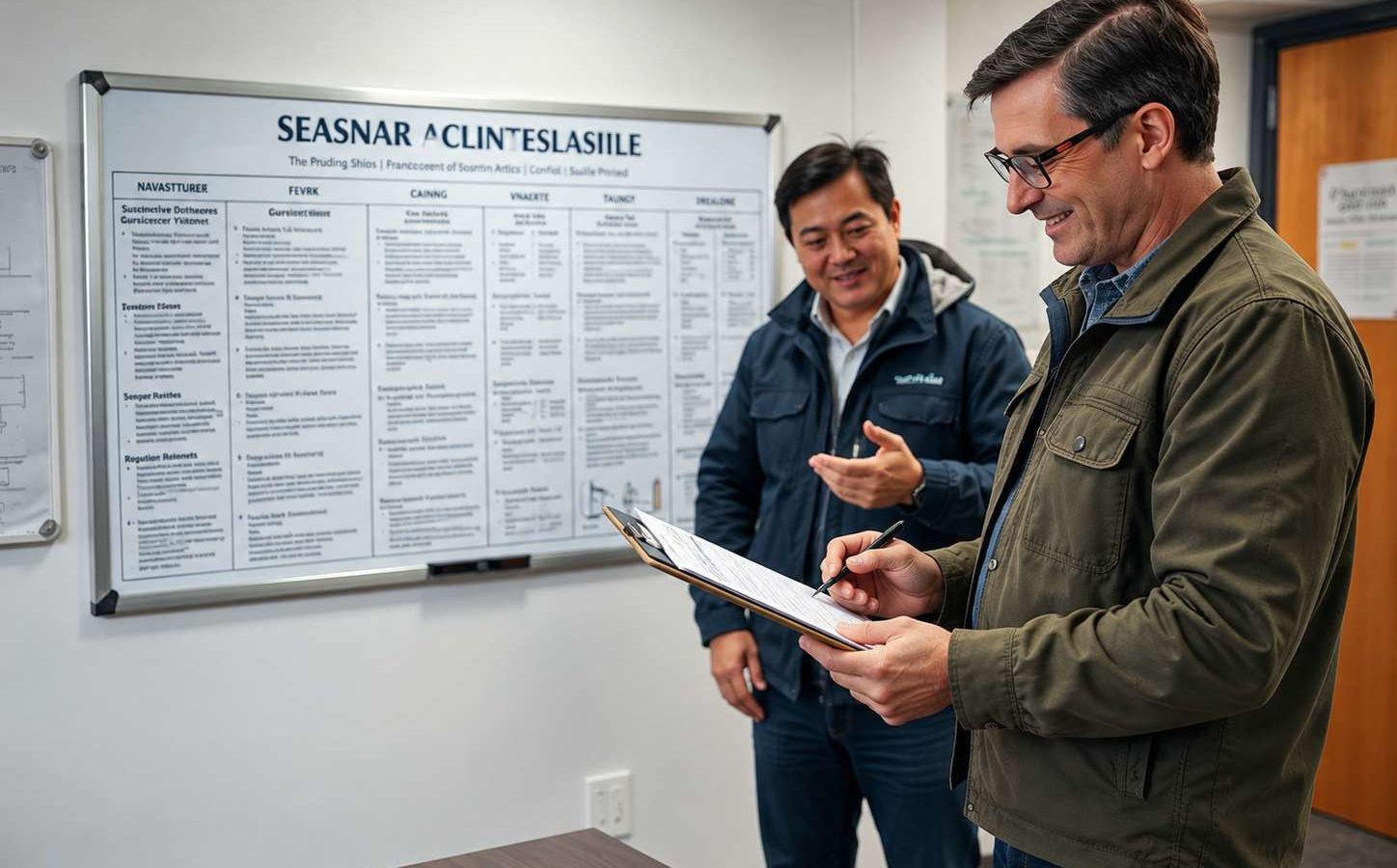
A seasonal maintenance program turns weather, occupancy, and asset-risk patterns into planned work. For campuses and portfolios, the goal is to schedule inspections, preventive tasks, repairs, and capital triggers before each season creates avoidable failures.
Portfolio maintenance brief
- Build the program around climate, occupancy, asset criticality, and service risk.
- Separate seasonal inspections from preventive maintenance, corrective work, and capital planning.
- Use field observations, work-order history, and asset data to refine the calendar each year.
- Assign owners, due dates, proof requirements, and escalation rules to every seasonal task.
Start with seasonal risk, not a generic checklist
A campus or portfolio is too complex for one copied checklist. Buildings differ by age, envelope exposure, HVAC type, roof access, utility service, occupant sensitivity, landscape conditions, and operating hours. A seasonal maintenance program should ask what each season does to each asset group. Winter may stress roofs, boilers, freeze protection, entrances, and emergency power. Spring may expose drainage failures, exterior deterioration, and pest issues. Summer may overload cooling, irrigation, paving, and outdoor work. Autumn may be the window for roof cleaning, heating startup, gutter checks, and snow-readiness.
The program should classify tasks into risk buckets: life safety, business continuity, occupant comfort, asset protection, regulatory obligation, energy performance, and appearance. That structure helps managers defend priorities when labor and budget are limited. The ENERGY STAR O&M best practices emphasize tuning up, turning off, and checking building systems as part of efficient operations, and those ideas fit naturally into a seasonal calendar.
Build the asset map before building the calendar
A useful seasonal program starts with an inventory. At minimum, capture building name, asset type, location, age or install date, criticality, warranty status, maintenance responsibility, access constraints, and known failure history. A roof drain serving a hospital wing, a sump pump protecting an archive, and a rooftop unit serving a classroom building do not carry the same risk.
Asset criticality should shape frequency. Low-risk tasks may be inspected annually, while high-risk items may need pre-season, mid-season, and post-event checks. Portfolio teams should also document weather thresholds: heavy rainfall, freezing temperature periods, heat waves, high wind events, extended shutdowns, and large occupancy changes. The GSA building operations and maintenance services guidance is useful because it connects preventive, predictive, and reliability-centered maintenance to reliable service across building systems.
| Seasonal window | Priority systems | Practical tasks to schedule |
|---|---|---|
| Late winter to spring | Roofs, drains, envelopes, grounds, stormwater | Clear debris, inspect water entry points, review freeze damage, repair trip hazards |
| Spring to early summer | Cooling, ventilation, irrigation, paving, exterior finishes | Start cooling systems, test controls, inspect exterior coatings, plan access work |
| Late summer to autumn | Heating, roofs, gutters, emergency power, lighting | Complete heating startup, clean gutters, test backup systems, review snow plans |
| Winter operations | Freeze protection, entrances, snow response, critical spares | Monitor vulnerable spaces, stage supplies, confirm response routes, check alarms |
Convert inspections into work orders
Inspection is only useful when it produces action. Each seasonal task should state what proof is required: photo, reading, checklist, technician note, meter value, test result, or supervisor signoff. If a roof inspection finds ponding, clogged strainers, deteriorated sealant, or damaged flashing, the program should create corrective work with priority and due date. That is especially important for exterior assets, where flashing details that prevent repeat water intrusion depend on routine observation, drainage, and timely repair.
Work orders should also distinguish between a task that was completed and a task that was deferred. Deferrals are not failures if they are visible and risk-ranked. Hidden deferrals are dangerous because managers may believe seasonal readiness exists when it does not.
Balance preventive, corrective, predictive, and capital work
A seasonal program is not only a preventive maintenance calendar. It should be the front end of a broader asset strategy. Preventive tasks reduce predictable wear. Corrective work fixes known defects. Predictive tasks use readings, trends, sensors, or inspections to act before failure. Capital planning handles replacements or upgrades that exceed routine maintenance.
The DOE FEMP operations and maintenance best practices guide provides a broad framework for operational efficiency and maintenance management. For campus teams, the practical takeaway is to connect day-to-day O&M records with capital planning. If cooling startup produces the same compressor failures each year, or if roof drains clog in the same locations every spring, the program should trigger a root-cause review, not just repeat work orders.

[IMAGE PLACEHOLDER 2: Exterior campus walkway after rain with maintenance staff inspecting drains, roof edges, and planted areas from a distance, under natural light.]
Make the calendar fit actual operations
Seasonal maintenance competes with classes, tenants, events, clinic hours, manufacturing shifts, retail traffic, and weather windows. The calendar should therefore include access restrictions, noise limitations, occupant notification requirements, permit needs, and vendor lead times. A school campus may schedule disruptive work during breaks. A hospital may need infection-control coordination. A retail portfolio may avoid peak shopping periods. A multifamily operator may batch work by building stack or courtyard.
Appearance work should also be tied to asset condition. Painting, sealant replacement, pressure washing, and exterior repairs often share lifts, swing stages, barricades, and resident notices. Pairing those scopes can reduce disruption. For example, a portfolio that already tracks paint wear can connect that data to repaint cycle planning for multifamily and commercial properties rather than treating repainting as a purely cosmetic decision.
Assign ownership and escalation rules
Every task needs an owner. That owner may be an in-house technician, vendor, property manager, safety lead, or capital project manager. The program should define who schedules the task, who performs it, who verifies completion, and who escalates exceptions. Without that structure, seasonal readiness becomes a set of reminders that no one owns.
Escalation rules should be specific. A blocked roof drain, failed sump pump, cracked heat exchanger, leaking domestic water line, failed emergency light, or unsafe pavement condition should not sit in the same queue as a low-priority touch-up. The CMMS or work-order platform should route exceptions by risk, not just by date.
Use data to improve the next cycle
At the end of each season, review what happened. Which tasks were late? Which assets failed despite maintenance? Which vendors performed well? Which inspections found nothing useful? Which buildings produced the most occupant complaints? Which issues should become capital projects? That review prevents the program from becoming stale.
Portfolio leaders should watch for pattern language. Repeated roof leaks may suggest envelope or drainage work. Frequent comfort complaints may indicate controls issues. Repeated exterior paint failure may point to moisture, substrate preparation, or exposure. Some properties may even need separate playbooks for historic buildings, where interior renovations such as open-concept remodels in older houses require more careful structural, hazardous-material, and code review than newer buildings.
This guidance is educational and does not replace professional engineering, code, safety, legal, environmental, or facility management advice. Local conditions and jurisdictional obligations should shape the final program.
Annual reset cue
After each season, retire tasks that never produce value, elevate recurring defects, and turn the next calendar into a decision tool rather than a reminder list.