Cordless vs Corded Leaf Blowers: Which Should You Buy?
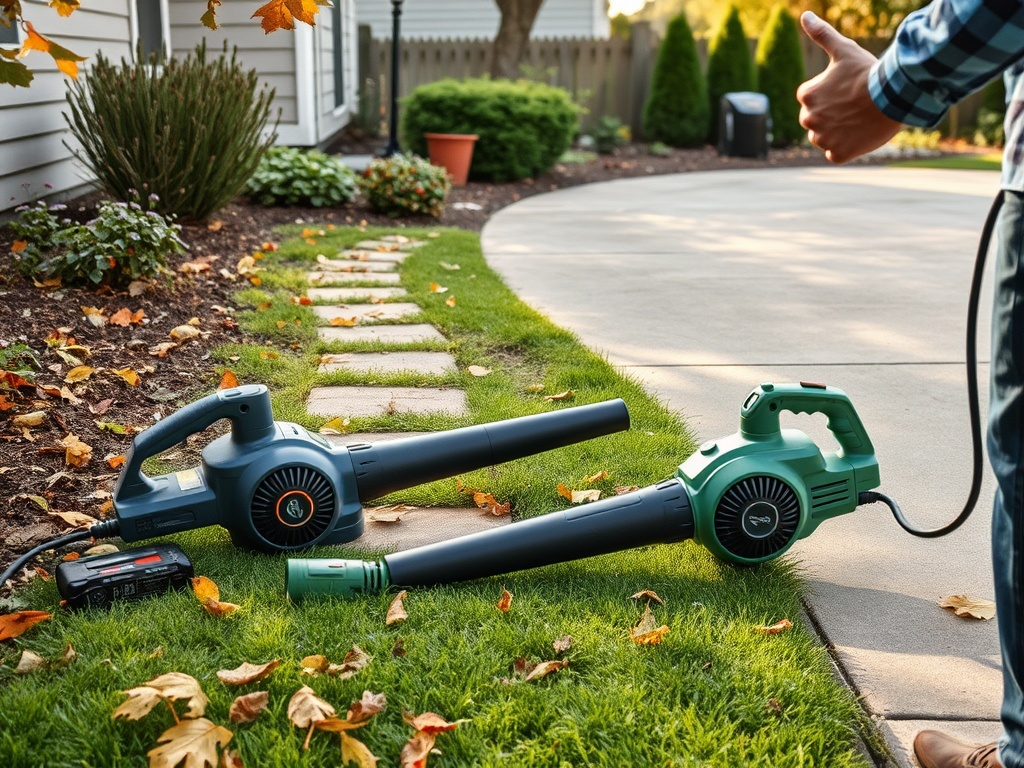
Choose a cordless leaf blower if mobility, quick setup, and freedom from an extension cord matter most. Choose a corded electric blower if your cleanup area stays close to outdoor power and you prefer continuous operation without managing battery charge. For either type, compare actual manufacturer specifications, ergonomics, noise, local restrictions, and the size and layout of the area you maintain.
The Short Buying Answer
TL;DR: Cordless models are easier to move around cars, trees, fences, and larger yards, but runtime depends on the battery and workload. Corded models can run as long as power is available, but the cord limits range and adds setup and trip-management concerns. The better buy is the one that matches your property, not the one with the more impressive headline specification.
Both avoid gasoline-engine maintenance, but real usability still depends on runtime, reach, handling, and property layout.
Cordless Blowers Favor Mobility and Fast Starts
A cordless blower is self-contained once a charged battery is installed. There is no extension cord to route around landscaping, vehicles, furniture, or corners. That makes cordless equipment attractive for properties with separated cleanup zones or obstacles.
The main planning variable is battery capacity and compatibility. Runtime changes with blower speed, workload, battery size, temperature, battery age, and tool design, so use manufacturer test information as a comparison point rather than a guarantee. If you already own tools on the same battery platform, a bare-tool purchase may reduce cost, but only if the battery is approved for the blower and provides enough capacity for the job.
Battery charging also becomes part of maintenance. Store and charge lithium-ion batteries according to manufacturer instructions, protect them from damage and unsuitable temperatures, and stop using packs that show swelling, impact damage, overheating, or other concerning behavior.
Corded Blowers Favor Continuous Operation Near Power
A corded blower can operate continuously while connected to suitable power, which is useful for repeated cleanup around a small property, driveway, patio, or courtyard. There is no traction from battery weight, and no charging cycle to plan.
The trade-off is cord management. Range depends on the power source, manufacturer-approved extension-cord type and gauge, and the safe routing of the cord. The cord can snag on shrubs, tires, edging, furniture, and corners. It must also be kept away from wet conditions and damage.
Never assume any household extension cord is suitable for outdoor power equipment. Follow the blower manufacturer’s requirements for outdoor-rated cords, electrical capacity, connection protection, and maximum length. If the needed reach exceeds safe product guidance, a cordless model or another approach may be more appropriate.
Comparison Table: Match the Tool to the Property
| Buying factor | Cordless electric | Corded electric |
|---|---|---|
| Mobility | High; no tether during use | Limited by outlet and cord routing |
| Operating time | Limited by battery charge and workload | Continuous while suitable power is available |
| Setup | Install charged battery and start | Route and connect suitable outdoor cord |
| Weight balance | Battery adds tool weight | No onboard battery, but cord can tug |
| Ongoing planning | Charging and battery condition | Cord inspection and safe routing |
| Large obstacle-filled yard | Often more convenient | Can become cumbersome |
| Small area near an outlet | Convenient | Often a practical fit |
| Purchase cost | Varies; battery and charger affect package price | Often simpler package cost, but models vary |
| Storage | Tool plus batteries/charger | Tool plus extension cord |
| Best decision metric | Enough usable runtime with comfortable handling | Safe reach and easy cord management |
These are general characteristics, not a ranking. Individual products vary widely, so compare the manufacturer’s airflow, air-speed, weight, control, battery, cord, and warranty specifications for the exact models you are considering.
Do Not Shop by Air Speed Alone
Leaf-blower marketing may emphasize miles per hour, cubic feet per minute, or both. Air speed describes how fast air moves, while airflow describes volume. Neither number by itself predicts how useful a blower will feel in every situation.
Wet leaves, gravel, flowerbeds, large open lawns, tight corners, and hard surfaces create different demands. Variable-speed control can matter as much as peak output because delicate beds and dry dusty areas may call for less force.
If possible, evaluate weight, grip, trigger effort, balance, and nozzle control in person. A slightly lower-output tool that you can handle comfortably for the entire job may be more practical than a heavier unit that quickly causes fatigue.
If you are still building basic tool confidence, the principles in beginner DIY home projects apply here too: choose equipment you can control, read the instructions, and match the tool to a defined task.

Noise and Hearing Protection Still Matter
Electric does not mean silent. Leaf blowers and other power tools can produce sound levels that warrant hearing protection depending on the model, operating mode, duration, and distance. The CDC’s National Institute for Occupational Safety and Health explains that repeated exposure to loud noise can damage hearing and provides noise and hearing-loss guidance.
For homeowners, the practical approach is to use the manufacturer’s noise information when available, follow local noise ordinances, limit unnecessary high-speed operation, and use properly fitted hearing protection when conditions call for it. Also consider neighbors, pets, children, and time-of-day restrictions.
Dust and debris are additional concerns. Wear eye protection, keep people and animals out of the discharge path, and avoid blowing material toward roads, vehicles, windows, open doors, or other people.
Maintenance Is Different but Not Zero
Cordless maintenance includes battery inspection, clean contacts, proper charging, and suitable storage. Corded maintenance includes inspecting the power cord and extension cord for damage, protecting connections, and replacing damaged electrical components according to manufacturer guidance.
Both types need the air intake kept clear, the nozzle checked for damage, and debris removed from the housing. Do not reach into an intake or service the tool while it is connected to power or while a battery is installed unless the manufacturer specifically directs a safe procedure.
Storage is easier when the blower has a designated wall or shelf location with its accessories. If your garage or utility area is becoming crowded, the comparison approach from decluttering by category versus by room can help reduce duplicate cords, dead batteries, and unused tools before you add another piece of equipment.
Use This Decision Framework Before Buying
Choose cordless when you have multiple cleanup zones, obstacles that make cord routing annoying, or an existing compatible battery platform that meets the blower’s needs.
Choose corded when the work area is compact, outdoor power is conveniently located, continuous runtime matters, and you can route a suitable cord without creating a hazard.
Consider neither if most cleanup can be handled efficiently with a rake, broom, or manual sweeper. Manual tools may be quieter, cheaper to maintain, and more appropriate for small areas or noise-sensitive times.
Property layout matters as much as the tool. If outdoor equipment storage competes with indoor living space, living room layout ideas that improve flow reinforce the same broader rule: preserve movement and assign every bulky item a purposeful place.
Buy for the Job You Actually Repeat
Write down where you blow leaves or debris, how far those areas are from power, how long a typical cleanup takes, and which obstacles you work around. Then compare exact product specifications and handling. A cordless blower is usually the easier mobility choice; a corded blower is often the simpler continuous-power choice. The best purchase is the one whose limitations fit your property.
This article provides general consumer and yard-equipment information. Product specifications, electrical requirements, battery safety, hearing risk, and local noise or equipment rules vary; follow manufacturer instructions and applicable local regulations.[/