Kitchen Storage Ideas That Add Space Without Renovating
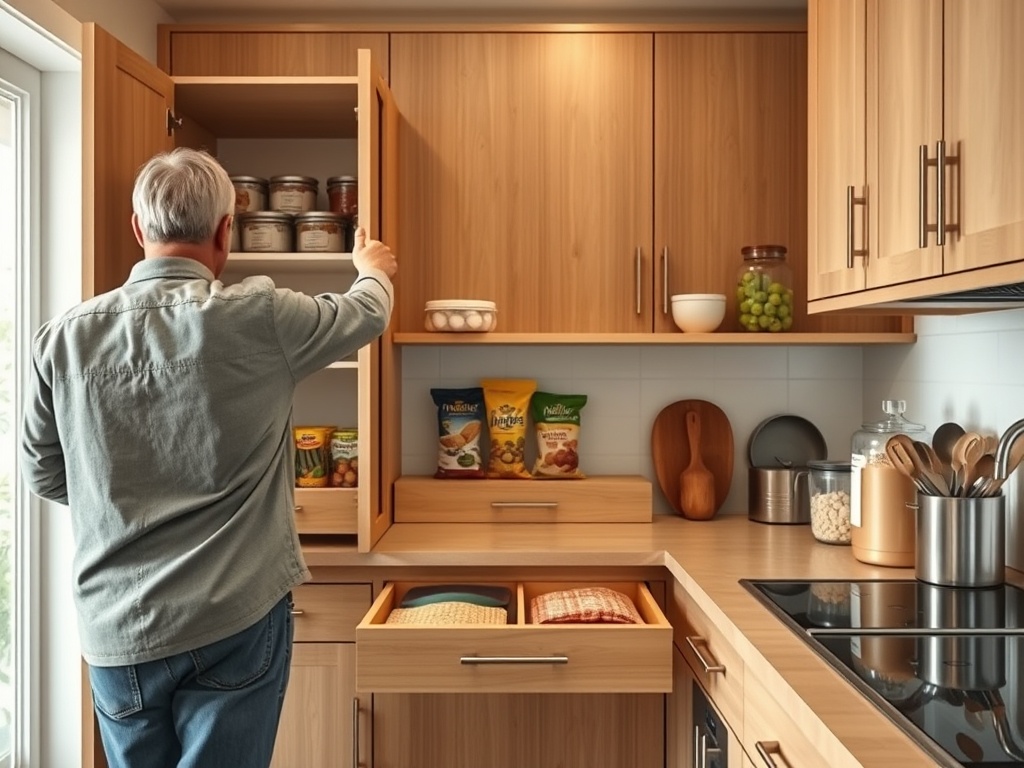
You can make a kitchen hold and function like a larger space without changing cabinets by improving access to the storage you already have. The highest-value moves are usually reducing duplicates, using vertical space inside cabinets, matching storage zones to tasks, and choosing organizers that fit exact cabinet and drawer dimensions.
More Capacity Starts With Better Access
TL;DR: Empty and measure one zone at a time. Keep daily-use items near the task they support, move rarely used pieces higher or farther away, use shelf risers and drawer dividers to reduce stacking, and avoid organizers that consume more space than they save. Treat pantry food, sharp tools, heavy cookware, cleaners, and child-accessible cabinets as safety-sensitive categories.
A kitchen can feel short on storage even when cabinets are not full. Deep shelves hide items, tall cabinets waste vertical space, and drawers become mixed layers. Better access can solve much of that friction.
Start by identifying the zones that slow you down most. If you have to move five pans to reach one lid, that is an access problem. If food expires because it disappears at the back of a shelf, that is a visibility problem. If cleaning products share space with food, that is a placement problem.
Zone Storage Around Real Kitchen Tasks
Organize around activities rather than generic categories. A coffee zone might group mugs and supplies near the machine. A baking zone can group bowls, measuring tools, ingredients, and pans. A lunch-packing zone can keep containers and shelf-stable snacks together.
This does not mean every related item must occupy one cabinet. The goal is to reduce movement during repeat tasks. If an object is used daily, give it a low-friction location. If it is used a few times a year, it can tolerate a higher shelf or less convenient position.
Before adding storage accessories, consider whether decluttering is the first step. The comparison of decluttering by category versus by room can help when duplicate mugs, utensils, containers, or gadgets are spread across several cabinets.
Use Cabinet Height Instead of Building New Shelves
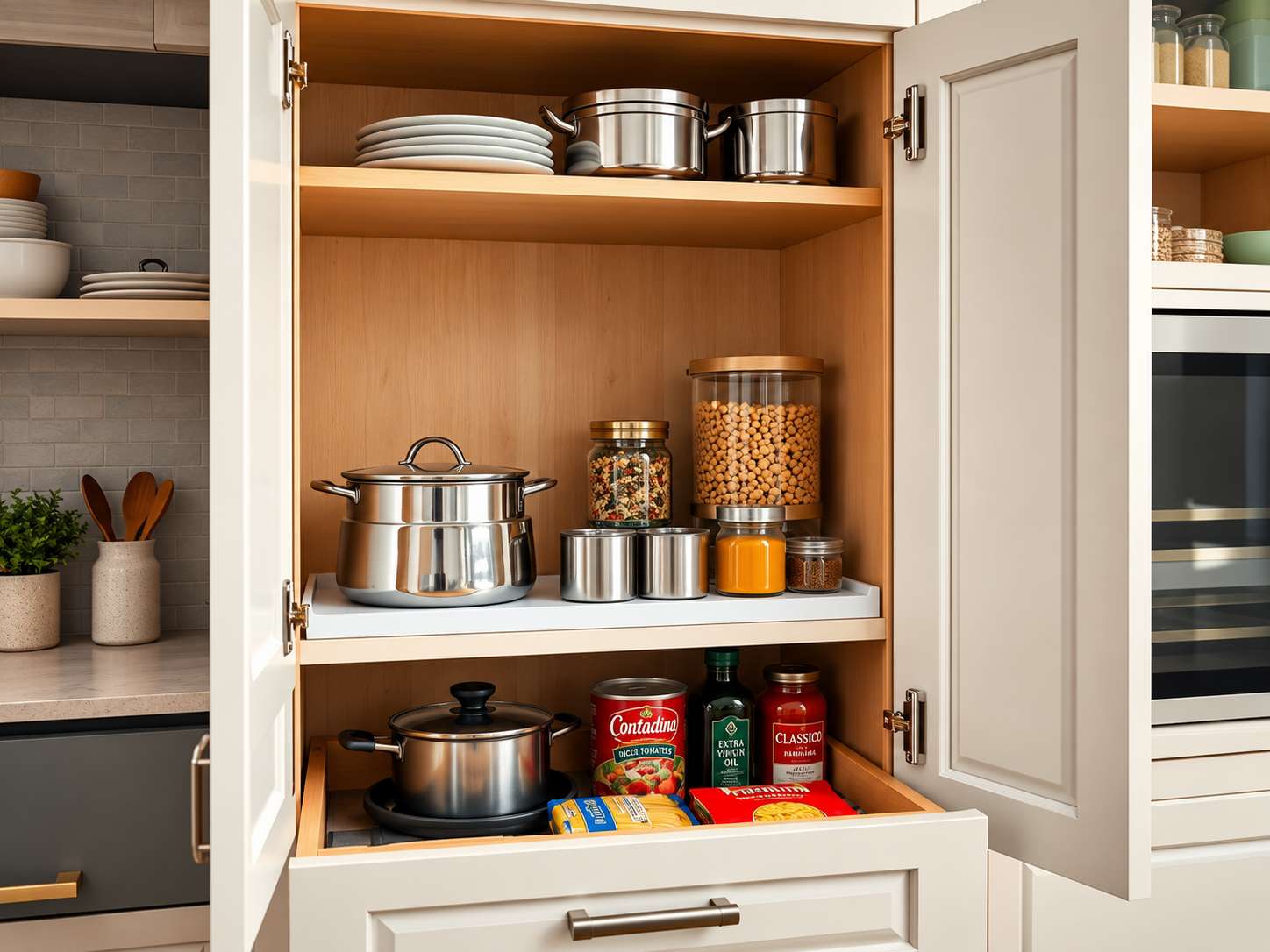
Many cabinets have more vertical clearance than the objects inside need. Shelf risers can create a second level for plates, bowls, mugs, or pantry goods without permanent installation. Stackable bins may work for lightweight packaged items, but they should not create unstable towers or make labels impossible to see.
Under-shelf baskets can use otherwise empty space, provided the shelf and organizer are designed to carry the intended load. Avoid hanging heavy cookware from improvised hardware. If you are adding any permanent rack or fastener, confirm cabinet material, fastener requirements, and clearances before drilling.
For corner cabinets, the goal is access rather than maximum packing density. A rotating tray can help with bottles or small pantry items if the diameter fits the cabinet and the contents remain stable. Large, seldom-used appliances may be better moved to a different storage area rather than forcing them into a hard-to-reach corner.
Make Drawers Work in Layers Without Creating Layers of Clutter
Drawer dividers are most useful when they prevent items from overlapping. Adjustable dividers can separate utensils, cooking tools, wraps, or food-storage accessories. Shallow trays can create a defined top layer in a deep drawer, but only when the items underneath remain accessible.
Measure the interior after accounting for drawer sides, slides, and any narrowing at the back. An organizer that technically matches the advertised drawer width may still interfere with movement if the internal dimensions are smaller.
Heavy pots and appliances are generally easier to manage in lower storage. Sharp tools need a secure location that protects the cutting edge and reduces accidental contact. In households with children, use appropriate child-safety measures where necessary rather than assuming a high drawer is always inaccessible.
Turn Cabinet Doors Into Selective Storage Surfaces
The inside of a cabinet door can hold lightweight, flat, frequently used items if the door, hinge, and organizer are suitable. Good candidates may include measuring spoons, small wraps, pot lids in purpose-built racks, or cleaning accessories in a dedicated non-food cabinet.
Check that the organizer will not hit shelves or stored items when the door closes. Add weight gradually and avoid overloading the hinge side. Adhesive systems should be compatible with the cabinet finish and the expected temperature and moisture conditions.
A door-mounted solution is useful only if it keeps the cabinet easy to close. If it requires rearranging the shelf every time, it has traded one form of friction for another.
Improve Pantry Visibility Before Adding More Containers
Clear containers can help some households, but decanting every product is not automatically more efficient. Original packaging may provide preparation instructions, allergen information, date codes, and traceability that matter. If you decant, preserve important information in a safe and useful way.
For shelf-stable foods, the U.S. Department of Agriculture recommends cool, clean, dry storage and protection from moisture or pests; its dry-goods storage guidance provides practical food-safety context. Keep pantry organization secondary to safe storage conditions.
Use simple visibility rules: shorter items in front, taller items behind where the shelf depth allows; open packages grouped together; duplicates placed together; and older products positioned where they are more likely to be used before newer ones. A small riser can improve line of sight without requiring full decanting.
Do a Measurement-First Storage Reset
Follow this sequence for one cabinet or drawer:
- Empty the zone completely. Wipe it down and check for damage, leaks, pests, or loose hardware.
- Sort by use. Daily, weekly, occasional, and rarely used items should not compete for the same easy-access space.
- Remove duplicates that no longer serve a purpose. Keep enough for your household, not every piece acquired over time.
- Measure clear dimensions. Width, depth, height, door swing, hinge location, and shelf thickness can all matter.
- Choose one access problem to solve. Vertical stacking, hidden items, rolling lids, mixed utensils, or awkward reach.
- Add the smallest useful organizer. Avoid filling every inch with hardware.
- Test for a week. If people stop returning items to the system, simplify it.
This process applies beyond kitchens. The same idea of designing around movement rather than maximum density also appears in living room layout planning.
Know Where Storage Advice Meets Design Standards
Kitchen clearances, accessible design, cabinet planning, and storage systems can become more technical when a project moves beyond organizers into built-in changes. The National Kitchen & Bath Association maintains professional kitchen and bath planning guidelines that cover clearances, equipment location, storage systems, accessibility, and related planning considerations.
For a no-renovation project, you do not need to redesign the kitchen around professional standards. But the broader principle matters: storage should support safe access and movement. Do not add a cart, shelf, or freestanding rack if it narrows a critical passage, interferes with an appliance door, crowds a heat source, or creates a tipping hazard.
If you are also trying to bring plants or herbs into a compact home, apartment gardening strategies for balconies and windowsills can help keep growing supplies organized without taking over food-prep areas.
Make the Kitchen Easier to Reset
The best storage improvement is one households can maintain. Give daily-use items obvious homes, reduce the need to unstack, and leave a little open capacity instead of packing every shelf to its limit. Start with the cabinet that causes the most repeated frustration and improve that one zone before buying organizers for the entire kitchen.
This article provides general home-organization and kitchen-planning information. Food-safety needs, child-safety needs, cabinet construction, accessibility requirements, and building conditions vary; follow product instructions and consult qualified professionals for permanent alterations or safety-critical installations.[/