Confidence vs Overconfidence: Finding the Right Competitive Mindset

Confidence is trust built from preparation; overconfidence is certainty that outruns evidence. Competitive athletes need enough belief to act decisively, but enough humility to keep learning, checking details, and respecting opponents.
TL;DR: Key Takeaways
- Confidence focuses attention on controllable actions; overconfidence ignores feedback.
- Routines, review, and honest benchmarks keep belief grounded.
- The warning signs are risky shortcuts, dismissing coaching, blaming others, and treating past success as future entitlement.
For performance context, the APA sport psychology journal and the IOC consensus work on mental health in elite athletes show why mindset, health, and performance should be discussed together.
The difference in one sentence
Confidence says, “I have prepared, and I can execute the next action.” Overconfidence says, “I do not need to prepare because I am already better.” The difference matters because sport rewards decisive action, but punishes athletes who stop noticing risk. A confident player can be aggressive and coachable at the same time. An overconfident player often mistakes noise for leadership and certainty for readiness.
Sport psychology research, including work published through organizations such as the American Psychological Association, treats performance and psychological functioning as connected. The practical takeaway for everyday athletes is not to diagnose themselves. It is to build routines that keep belief tied to preparation, feedback, and recovery.
What confidence looks like in practice
Confident athletes prepare consistently, ask useful questions, and recover from mistakes. They can name the cue they are using. A soccer player might focus on scanning before the first touch. A lifter might focus on bracing before each repetition. A defender might focus on angle and communication. Confidence becomes visible as repeatable behavior under pressure.
That is why structured drills are so helpful. In soccer first-touch drill progressions, confidence grows because difficulty increases gradually. The athlete collects evidence: I can receive cleanly, then I can receive while moving, then I can receive under pressure. Real confidence is built from those small proofs.
What overconfidence looks like before it costs you
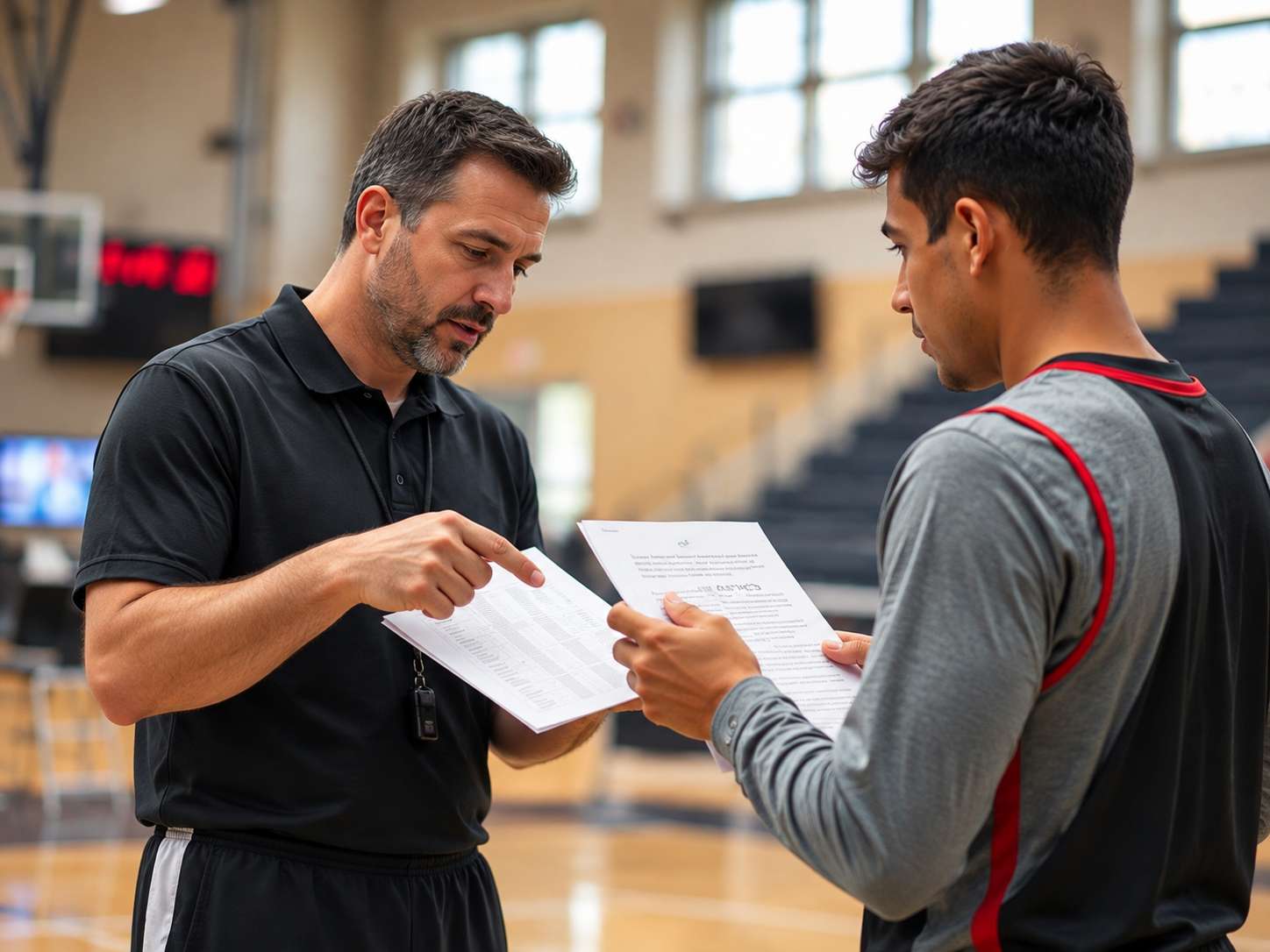
Overconfidence often appears before the scoreboard exposes it. Warning signs include skipping warm-ups, ignoring scouting, laughing off mistakes, forcing low-percentage plays, refusing simpler options, and treating teammates as supporting characters. In training, overconfident athletes may chase load or speed before technique is stable.
This can happen after success. A winning streak, promotion, viral clip, or strong tournament can create a story that the athlete is ahead of the process. Coaches should not attack belief; they should reconnect belief to standards. Ask: what did you do well, what evidence supports that, and what needs work next?
| Situation | Confidence | Overconfidence |
|---|---|---|
| Preparation | Follows routine | Skips basics |
| Feedback | Listens and filters usefully | Dismisses correction |
| Risk | Takes smart chances | Forces low-percentage plays |
| Failure | Reviews and resets | Blames or spirals |
| Success | Repeats standards | Assumes future results |
A comparison table for coaches and athletes
The table below separates confidence from overconfidence in observable terms. It is not about personality style. A quiet athlete can be overconfident if they stop preparing. A loud athlete can be genuinely confident if they keep standards high and accept feedback.
Use the table after practice or competition. Pick one line and discuss it with the athlete. The best conversations are specific: “You trusted your serve routine under pressure” is more useful than “be confident.” Likewise, “You forced three passes because you assumed the defender was beaten” is more useful than “stop being cocky.”
Routines that keep confidence grounded
A grounded confidence routine has three parts: preparation, cue, and review. Preparation includes sleep, warm-up, practice, and knowing the plan. The cue is the short phrase that directs attention during action, such as “early feet,” “strong brace,” or “see ball and player.” Review happens after the play, point, lift, or match. It asks what happened without turning every mistake into identity judgment.
Physical preparation matters too. Athletes who build strength patiently learn to respect progression. strength training for athletes offers a useful example because compound lifts reward confidence only when technique, load, and recovery stay aligned.
How coaches can challenge belief without crushing it
Coaches should avoid two extremes. One is constant criticism that makes athletes afraid to act. The other is empty praise that removes standards. The middle path is evidence-based feedback. Praise the action that should repeat. Correct the decision that created risk. Invite the athlete to explain what they saw. This keeps confidence active rather than fragile.
For team settings, roles help. A player can be confident in a role even if they are not the star. Defensive communication, screening, pressing triggers, or safe possession choices can all be winning actions. Tactical systems such as press, zone, and man-to-man defenses work best when athletes trust their roles without assuming the opponent will cooperate.
Pre-game and post-game prompts that keep belief useful
Before competition, use prompts that point attention toward controllable actions. Examples include: What is my first job? What cue will I use when pressure rises? What does good body language look like after a mistake? These questions create confidence because they make the next action concrete. They also reduce the temptation to predict outcomes before the contest begins.
After competition, keep review specific. Ask what preparation showed up, what decision needs work, and what evidence should guide the next session. Avoid global labels such as fearless, weak, clutch, or lazy unless they are translated into actions. An athlete cannot practice a label, but they can practice scanning earlier, holding shape, breathing before a serve, or accepting the simple pass.
A note for parents and teammates
Parents and teammates influence the confidence climate. Celebrate preparation, brave decisions, and honest review more than status labels. When the group praises only winning or starring, athletes learn to protect their image. When the group praises useful actions, athletes can stay bold without pretending they have nothing left to learn.
Use opponents as evidence, not threats
A grounded competitor treats opponents as information. A stronger opponent reveals the next skill gap. A weaker opponent still deserves full preparation because sloppy habits transfer forward. This approach keeps confidence active in both wins and losses, and it reduces the emotional swing that often creates overconfidence after easy results.
Believe strongly, verify honestly
The goal is not to make athletes cautious. It is to make them brave with standards. Confidence should help an athlete take the open shot, play the forward pass, attempt the routine, or step into competition. Humility should make them review the outcome and prepare again.
For the next step, write a two-line confidence check before your next session: “The action I trust is…” and “The evidence I still need to build is…” That simple pairing keeps belief and growth in the same conversation.